Make Your Voices Count!

Calls for Input from Organizations of Persons with Disabilities
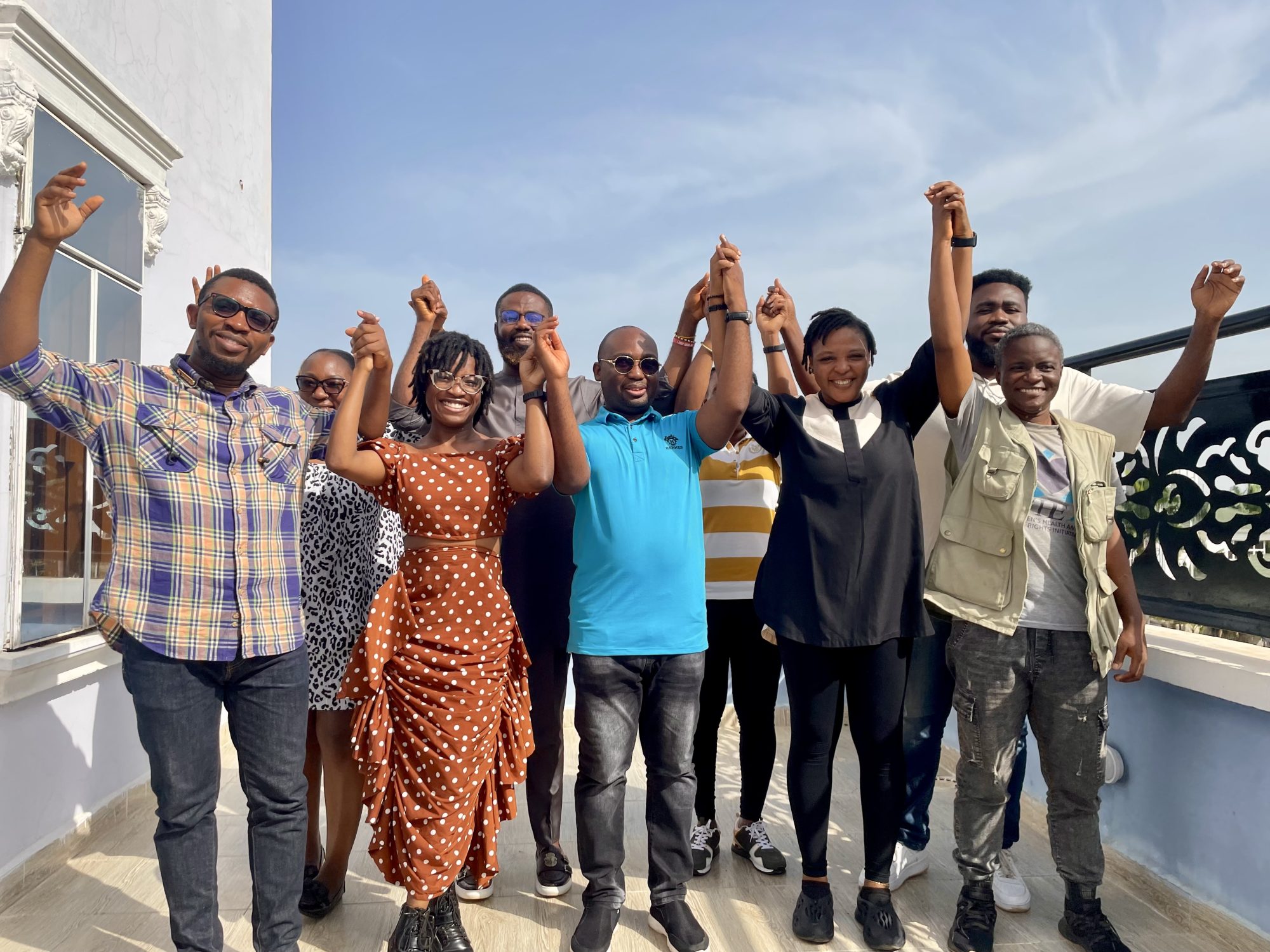
A group of Nigerian activists (men and women) are holding hands in unity and smiling outside.


When persons with disabilities participate in decision-making processes, it provides strong support towards ensuring that policies, strategies, programs and operations to be more effective in addressing barriers to inclusion and more relevant in supporting their full and equal participation.

—Consultation Guidelines of the UN Disability Inclusion Strategy

In line with Article 4(3) of the Convention on the Rights of Persons with Disabilities (CRPD), persons with disabilities and their representative organisations should be closely consulted and actively involved in matters concerning them. This includes persons with disabilities in all their diversity- children, women, older persons, persons with diverse SOGIESC, Indigenous peoples, migrants and others, as well as persons representing different disability constituencies.

Our views matter on all matters: Nothing without us! 

Our unique perspectives draw on our own expertise and experiences and can help shape and inform programs, policies and practices – including beyond disability-specific matters- to strengthen inclusion for the benefit of all.

Let’s put our participation to practice by seizing these opportunities*:

*Information on this web page will be updated regularly. Don’t miss out!

***

Report on violence against older women, Special Rapporteur on violence against women and girls. Deadline 10 April 2026

The Special Rapporteur would like to receive input to examine the forms and manifestations of violence experienced by older women, particularly those that they suffer on the basis of their age and sex, the relevant laws and gaps in legislation, and the best practices that could adequately address their challenges. The submissions will inform recommendations for States and other stakeholders on how to combat violence against older women and what legal, policy, and institutional measures are consistent with international human rights law obligations.

Questionnaire

العربية | English Français | Español

Respondents may wish to answer some but not all of these questions. Input is sought from civil society organizations, academia, legal, policy or health experts, States and national human rights mechanisms. Individuals should not send input.

Should the number of submissions remain manageable, the mandate may publish and cite those submissions, unless they are marked by their authors as confidential.

Input/comments should not exceed 3000 words and should be sent in Word or PDF in English, French, Spanish, Arabic, Russian, Chinese to [email protected] with the Email subject line: Violence against older women by 10 April 2026 23:30 (Geneva time).

For more information, visit the SR’s webpage.

General framework, architecture, and guiding principles of a legally binding instrument on the human rights of older persons, Deadline 22 April 2026

In accordance with the mandate established by the relevant intergovernmental process to elaborate an international legally binding instrument (LBI) on the human rights of older persons with the objective of promoting, protecting and ensuring the full enjoyment of human rights by older persons, stakeholders are invited to submit written inputs on the framework, architecture, and guiding principles of the legal instrument to inform ongoing deliberations and negotiations.

This submission of contributions aims to facilitate inclusive and transparent participation in the development of the instrument by enabling Member States, observer States, international organisations, national human rights institutions, civil society organisations, academia, and other relevant stakeholders to provide substantive comments, proposals, and technical expertise.

Key questions and types of input/comments sought

  1. What overarching framework should guide the international legally binding instrument on the human rights of older persons? Additionally, how can it best reflect and reinforce the recognition that older persons are rights-holders entitled to the full and equal enjoyment of all human rights and fundamental freedoms?
  2. What core principles should underpin the legally binding instrument, to ensure it effectively protects the rights of older persons? In addition, how can the legally binding instrument both reaffirm existing human rights for older persons and clearly identify and address gaps where further normative development is required?
  3. What overall structure or architecture should the legally binding instrument adopt to ensure clarity and effectiveness? For example, should it include a preamble, definitions, general principles, general obligations, specific rights, and implementation provisions?

If Stakeholders address other issues, submissions are also to be concise, clearly structured, and directly relevant to the issues under discussion.

Contributions should be submitted in Word in English, French, Spanish, Russian, Arabic or Chinese to: [email protected] with the email subject line: Input on a legally binding instrument on the human rights of older persons. They must be received by 22 April 2026 17:00 (Geneva time).

For more information, visit the OHCHR’s webpage.

Human Right to sanitation with non-discrimination, Special Rapporteur on the rights to water and sanitation, Deadline 30 April 2026

For his upcoming thematic report to be presented to the Human Rights Council at its 63rd session, the Special Rapporteur on the human rights to safe drinking water and sanitation will analyze the human right to sanitation. The human right to sanitation remains an unresolved challenge for millions of people, disproportionately affecting women, girls, and persons in vulnerable situations. Hygiene, including menstrual hygiene, although often omitted explicitly in legal formulations, is an integral part of the enjoyment of these rights in practice and a cornerstone of the human right to sanitation without discrimination.

The human right to sanitation entails ensuring that sanitation facilities (toilets) are available, accessible, affordable, safe, acceptable, private, and dignified. It must also explicitly encompass wastewater treatment infrastructure, with the corresponding state and non‑state responsibilities when it comes to toxic contaminants.

In addition, the human rights to safe drinking water and sanitation are essential for the realization of other human rights, including their intersection with the rights to health and to a clean, healthy, and sustainable environment.

This call for inputs seeks to identify legal, regulatory, and community frameworks, experiences, and solutions to address these gaps, particularly with respect to hygiene, in households, institutions (schools, health centers, prisons), informal settlements, and humanitarian settings.

Key questions and types of input/comments sought

  1. Legal, Policy and Institutional Frameworks:
    • How is the human right to sanitation recognized in law and policy, and how is hygiene integrated?
    • How are non-discrimination, participation, transparency and accountability ensured?
  2. Availability, accessibility, affordability, safety, acceptability, privacy and dignity:
    • What are the minimum acceptable levels if services in terms of sanitation and hygiene?
    • Which types of inequalities should be given priority attention? How is affordability protected?
    • How are conditions of dignity, privacy and safety monitored and guaranteed?
    • How can adequate wastewater treatment be ensured?
  3. Sanitation and Hygiene in Key Settings:
    • What is the status of water sanitation and hygiene in schools, health-care facilities, informal settlements, rural areas and places of detention, including menstrual hygiene management, privacy, accessibility and hygiene facilities?
  4. Gender Equality, Menstrual Health and Intersectionality:
    • What gender-specific barriers exist?
    • How are menstrual hygiene needs addressed?
    • How are the needs of persons with disabilities incorporated?
  5. Environmental Safety, Climate Change and Water Resources:
    • What safeguards prevent pollution of water sources?
    • How are climate impacts affecting water, sanitation and hygiene systems and what adaptation measures exist?
    • How to regulate rainwater water drainage management and wastewater reuse?
  6. Humanitarian Settings and Displacement:
    • Which are water, sanitation and hygiene service levels for refugees and internally displaced persons?
    • How do emergency responses address hygiene, menstrual hygiene management, outbreaks and climate-related shocks?
  7. Financing, Regulation and Accountability:
    • Which are the primary financing sources for water, sanitation and hygiene?
    • How can we regulate the rights and obligations of right holders and responsible institutions, and how can we guarantee transparency, accountability, community participation and the right to make complaints?
  8. Data, Monitoring, Promising Practices and Recommendations:
    • Which promising practices or innovations have proven effective?
    • What recommendations do you propose for States and other stakeholders?

Input/comments no longer than 3000 words / 5 pages in Word, PDF, may be sent in English, French, Spanish by e-mail to: [email protected] with the email subject line: Contribution: human right to sanitation . They must be received by 30 April 2026 . Unless otherwise specified, the input will be published on the website of the Special Rapporteur. If you do NOT wish your written input or any other information to be published, please make this explicitly clear in your email.

For more information, visit the SR’s webpage.

Study on the implications of sea-level rise for the full enjoyment of human rights, Human Rights Council Advisory Committee, Deadline 30 April 2026

In accordance with Council resolution 60/20, the Advisory Committee is preparing a study on the implications of sea-level rise for the full enjoyment of human rights, and in particular to identify its impact on, among others, Indigenous Peoples, persons of African descent, persons with disabilities, persons belonging to national and ethnic minorities, and coastal communities, while paying specific attention to the disproportionate impacts on women and girls, including in rural areas. The study will be presented to the Council at its 64th session.

Additional information on the mandate can be found at this page

Objectives

The HRC Advisory Committee seeks the views of and inputs from many different stakeholders and rights-holders to inform its study on the implications of sea-level rise for the full enjoyment of human rights to be submitted to the HRC at its 64th session, and encourages the submission of specific data, statistics, best practices, and significant challenges to enrich the study and provide a comprehensive analysis.

What is the Advisory Committee?

The Human Rights Council Advisory Committee, composed of 18 experts, has been established to function as a think-tank for the Council and work at its direction. The Human Rights Council Advisory Committee provides the Council upon request with implementation-oriented, thematic studies and research-based advice on issues pertaining to the mandate of the Council; namely the promotion and protection of all human rights. The Advisory Committee may propose suggestions for further enhancing its procedural efficiency, as well as further research proposals within the scope of the work set out by the Council. For more details about its mandate and activities, see the webpage.

Key questions and types of input/comments sought

  1. Please explain in what ways sea level rise affects the full enjoyment of human rights. Please explain with reference to specific rights, including the right to a clean, healthy and sustainable environment. Where possible, please provide concrete data, studies, etc.
  2. Which groups are particularly vulnerable to sea level rise? Please explain how sea level rise affects these groups with specific reference to rights that are implicated. Where possible, please provide concrete data, studies, etc.
  3. What are the particular impacts of sea level rise on human rights of individuals, groups and Peoples in vulnerable situations (g., marginalized communities, Indigenous Peoples, persons of African descent, persons with disabilities, persons belonging to national and ethnic minorities, and coastal communities, as well as women and girls, including in rural areas)? How should these be prevented, and where not possible or foreseeable, mitigated, and remediated?
  4. What are the foreseeable and actual impacts of sea level rise on Small Island Developing States (SIDS), Least Developed Countries (LDCs) and Landlocked Developing Countries (LLDCs), and how should these be prevented, and where that is not possible or foreseeable, mitigated and remediated?
  5. What are the obligations of affected States in relation to sea level rise vis-à-vis individuals? Are these duties different depending on whether States are able to secure or maintain (a) a substantial, (b) a small part of habitable territory or (c) risk losing all their habitable territory? If not, how do the duties differ?
  6. What are the obligations of host States in relation to sea level rise vis-à-vis individuals? Are these duties different depending on whether affected States are able to secure or maintain (a) a substantial, (b) a small part of habitable territory, or (c) lose all their habitable territory?
  7. What are the obligations of all States (regardless of how they are affected)?
  8. What is the role of UN agencies, international financial institutions, and other international organisations?
  9. What are the responsibilities of private actors? Specify the source of these obligations or note whether the obligations should be recognized?
  10. What measures (legislative, administrative, institutional, or other), if any, exist to address sea level rise at national or regional level? Have human rights implications been taken into account in their adoption and implementation? Are there good practices or lessons learned in regulating sea level rise that include a human rights-based approach?
  11. What gaps or challenges in existing national, regional and international policies and legal frameworks have you observed? What recommendations do you have in order to address the gaps? Please, list them according to priority.
  12. Where litigation or formal complaints are necessary, what measures does the State provide to facilitate effective and prompt access to justice and remedies for individuals and communities?
  13. Stakeholders can share whatever elements they consider relevant to the current topic.

Input/comments should be sent to the Secretariat of the HRC Advisory Committee in Word, PDF in English, French, Spanish by email to [email protected], indicating in the subject line: “Submission to the call for inputs on sea-level rise and human rights” by 30 April 2026. The Committee also accepts video submissions, particularly from affected communities. Videos should not exceed 10 minutes and must be submitted via https://wetransfer.com/.

For more information, visit OHCHR’s webpage.


The implementation of inclusive humanitarian assistance in the context of current humanitarian reform processes, Special Rapporteur on Disability . Deadline 30 April 2026

For her next report to the 81st session of the General Assembly, the Special Rapporteur will examine the implementation of inclusive humanitarian assistance in situations of risk and humanitarian emergencies, and on how current humanitarian reform processes, including the Humanitarian Reset, can and must uphold States’ and other duty-bearers’ obligations under the Convention on the Rights of Persons with Disabilities (CRPD).

These obligations are further reaffirmed by UN Security Council resolution 2475 (2019), which explicitly recognizes the disproportionate impact of armed conflict on persons with disabilities and calls on States and relevant actors to ensure their equal access to humanitarian assistance and basic services, as well as their meaningful participation in humanitarian action and peacebuilding efforts.

Over the past decade, significant progress has been made in developing legal frameworks, policies, guidance, and standards aimed at promoting disability-inclusive humanitarian action. However, evidence consistently shows that implementation remains limited, uneven, and fragile, with persons with disabilities continuing to face barriers in accessing life-saving assistance, protection, and information, and in participating meaningfully in humanitarian decision-making. These implementation gaps risk undermining the effective realization of CRPD rights in humanitarian contexts.

At the same time, the international humanitarian system is undergoing significant reform in response to funding constraints and structural challenges. While humanitarian reform seeks to improve efficiency, effectiveness, and localization, there is a risk that without explicit safeguards, existing commitments to disability inclusion may be weakened or reversed, further entrenching exclusion and inequality.

Objectives

Through this report, the Special Rapporteur intends to shed light on the practical challenges to implementing inclusive humanitarian assistance in line with the CRPD; and measures, safeguards, and good practices that can ensure that humanitarian reform processes, including the Humanitarian Reset, strengthen rather than undermine the inclusion and participation of persons with disabilities.

Key questions and types of input/comments sought

To inform her report, the Special Rapporteur invites submissions from States, National Human Rights Institutions, UN entities, humanitarian actors, donors, organizations of persons with disabilities (OPDs), civil society organizations, academics, and other relevant stakeholders, on the following issues:

  • Information on how obligations under article 11 of the CRPD and related provisions as well as commitments under UN Security Council Resolution 2475 are implemented in practice in humanitarian contexts.
  • Challenges and barriers encountered by States and humanitarian actors in ensuring inclusive protection, assistance, and accessibility, through all stages of the humanitarian cycle (preparedness, assessment, planning, implementation, monitoring), as well as related good practices.
  • Information on the extent to which persons with disabilities and OPDs are involved in humanitarian decision-making, coordination mechanisms, and programme cycles. Assessments of the structural, procedural, or resource-related barriers to meaningful participation, and how these affect the relevance, accessibility, and effectiveness of humanitarian assistance for persons with disabilities.
  • Good practices related to the collection and use of disability-disaggregated data in humanitarian settings. Challenges in collecting, analysing, and using disability-disaggregated data for humanitarian decision-making.
  • Information on funding, capacity-building, and institutional support for disability-inclusive humanitarian action, including support provided to OPDs to enable their sustained participation in humanitarian action.
  • Analysis of how current humanitarian reform processes, including the Humanitarian Reset, affect disability-inclusive humanitarian action. Evidence of risks or opportunities arising from reform efforts, and of how the rights and needs of persons with disabilities are considered within humanitarian reform processes. Examples of measures necessary to ensure that reform strengthens, rather than weakens, inclusive humanitarian assistance.

Input/comments in Word/PDF, not exceeding 2000 words, may be sent in English, French, Spanish by e-mail to:  [email protected] with the email subject line: Submission to the call for inputs on inclusive humanitarian assistance by 30 April 2026. Please indicate who is making the submission at the beginning of your input and include an email address at which the submitter can be contacted.

For more information, visit the SR’s webpage.


Draft general recommendation on gender stereotypes, CEDAW Committee, Deadline 6 May 2026

The Committee on the Elimination of Discrimination against Women (CEDAW) is currently elaborating a draft general recommendation on gender stereotypes.

The Committee is inviting all interested parties to submit comments on the draft text  in writing on the “Draft general recommendation on gender stereotypes” to be submitted through the CEDAW online submission system at https://events.ohchr.org/.

The text of the draft general recommendation on gender stereotypes

Submissions:

  • Must be submitted in one of the working languages of the Committee – English, French or Spanish;
  • Must be submitted electronically in WORD format;
  • Must be submitted in one single document indicating precisely the paragraphs on which comments are being made. Inputs submitted as a text without specific references to paragraphs or in the format of track changes to the draft general recommendation will NOT be considered as the Committee expects inputs to be sent in a separate document that consists of comments on paragraphs of the draft recommendation;
  • Must not exceed a maximum of 3300 words for all comments made;
  • Should be written in a concise and focused style;
  • Will not be translated;
  • Will be posted on the CEDAW web page devoted to the draft general recommendation on gender stereotypes. If stakeholders do NOT want their submission to be posted on the web page, this should clearly be stated in the email accompanying the submission.

For more information, visit the Committee’s webpage.


The impact of trade agreements on women’s economic empowerment, Deadline 12 June 2026

OHCHR will prepare a report on trade agreements, including their gender equality provisions, and their impact on women’s economic empowerment. The report will be submitted to the Human Rights Council at its sixty-fifth session in 2027.

Key questions and types of input/comments sought

  1. Please describe how women have participated in the design, preparation and implementation of trade-related laws, policies or strategies in your country.
  2. Please indicate how your country monitors the impact of trade on human rights. How are the impact of women’s human rights and gender equality captured in such monitoring?
  3. Have human rights impact assessments been undertaken, before and/or after the conclusion of trade agreements? If such assessments have been conducted, did they:
    1. assess impacts of trade (or of a specific trade agreement) on women in their role as workers, entrepreneurs, consumers, users of public services, unpaid caregivers or citizens?
    2. consider the impacts of the trade (or of a specific trade agreement) on women not directly engaged in international trade (such as small-scale agricultural producers, business owners operating in the domestic market,)?
    3. consider the impacts on women in the informal economy (such as informal agricultural workers, contributing family workers, informal cross-border traders or street vendors)?
    4. consider the impacts on women facing multiple layers of discrimination? (for instance based on gender and disability, minority or Indigenous status, migration status, or geographical location)
  4. Has your country taken measures to prevent expected or actual negative impacts of trade and trade-related agreements on women’s economic empowerment and human rights, including the right to development? If your country has adopted any such measures, please describe them. Please also share, if exist, any analysis you may have on the impact of such measures.
  5. Please provide examples of negative and positive impacts of international trade agreements on conditions necessary for women’s economic empowerment and full enjoyment of their human rights. For example, have such agreements:
    1. increased or decreased States’ fiscal space to realize economic, social and cultural rights and to safeguard the right to development? Please provide illustrations if possible.
    2. resulted in an increase or a reduction of investment or expenditure on care and support systems (such as education, primary health care, childcare, support to older persons and persons with disabilities)? Please provide illustrations.
    3. resulted in strengthening or weakening of social protection systems? Please provide illustrations.
    4. led to strengthening or weakening of business enterprises’ practices relating to human rights and women’s rights in the export-oriented sector and/or in companies producing for the domestic market? For instance, have international trade agreements affected labour standards, opportunities for social dialogue or collective bargaining, gender pay analysis and transparency, or prospects for women to advance into more skilled positions? Have international trade agreements affected how companies comply with due diligence obligations throughout the supply chains? Please provide illustrations.
    5. affected women in rural areas, whether they are engaged in international trade or not? Please provide any illustrations you might have.
  6. Please share references of any studies on the impact of macroeconomic policies, including trade agreements, on women’s human rights, gender equality, women’s economic empowerment, in particular on the situation of women and girls living in poverty in your country or in trading partners.

Input/comments in Word format should not exceed 3000 words/5 pages, may be English, French or Spanish, and if possible, provided with a summary in English sent by e-mail. They must be received by 12 June 2026 to: [email protected]; Cc: [email protected] with the email subject line: input to the report on trade and women’s economic empowerment, pursuant to HRC resolution 59/18.

For more information, visit the OHCHR’s webpage.