Our Grantmaking in 2025
Blog by Katiya Sakala, Program Director
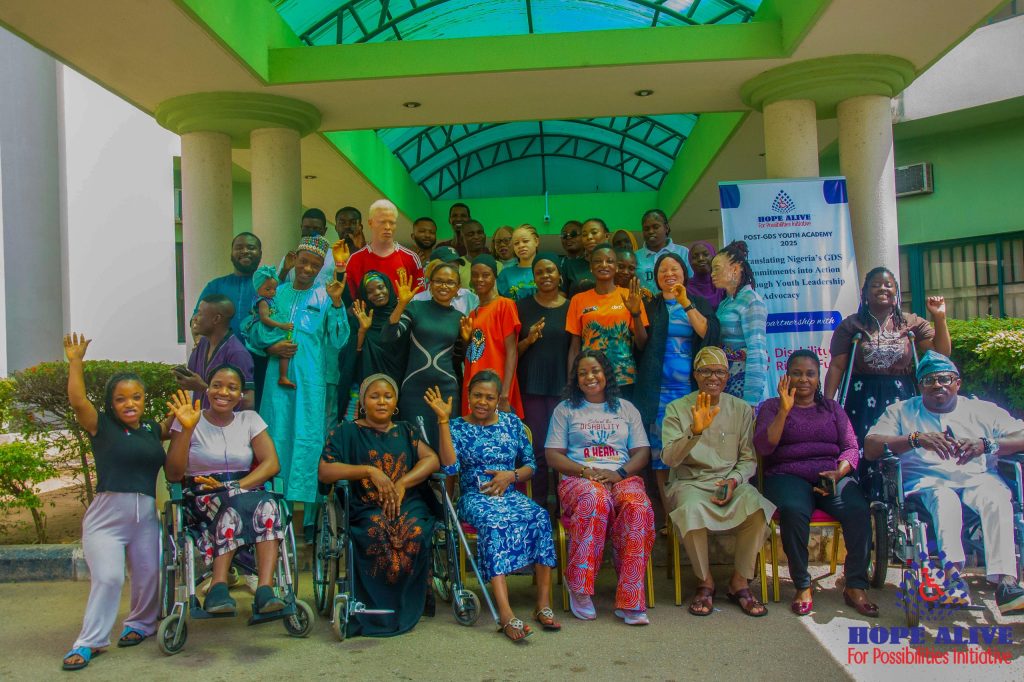
Participants of the post-GDS Youth Advocacy Academy 2025 organized by Hope Alive for Possibilities Initiative with support from DRF, photo credit: HAPI
In 2025, the Disability Rights Fund and our sister organization, the Disability Rights Advocacy Fund (together, DRF/DRAF, referred to collectively in this post as DRF), disbursed a total of $5.2 million (USD) despite a challenging backdrop of shrinking global human rights funding, where disability rights received a mere 2% of all human rights funding from foundations. Yet in this context of scarcity, we achieved historic expansion by making a total of 165 grants in 42 countries across Africa, Asia, the Pacific Islands, and the Caribbean.
Since our inception, DRF has centered disability rights through participatory grantmaking, peer learning, and advocacy. Persons with disabilities lead in every part of our work. DRF partners to propel community-based solutions, connecting disability advocates to broader human rights and social justice movements to shape laws, policies, and programs. 2025 grantmaking demonstrates how this commitment continues evolving: we funded over 60 organizations for the first time, while deepening support to long-term grantee partners.
Geographic Expansion Strengthens Voice
In 2025, we opened a call for Letters of Interest to any Organization of Persons with Disabilities (OPD) in any country in sub-Saharan Africa, Haiti, South- or South-East Asia or any of the Pacific Islands. It is the first time that we reached this broad geographic scope. We saw, through this opening, that geographic expansion strengthens rather than dilutes movement voices. Funding in 21 new countries exposes long-ignored exclusion while supporting fresh strategies.
New grantee organizations are prioritizing grassroots economic justice and demonstrate strong cross-disability solidarity (80% organize across disability types). Meanwhile, long-standing grantees more often prioritized structural gaps in national policy frameworks, disability-inclusive budgeting, legislative reforms, and treaty body engagement. Both nascent, grassroots organization and more established organizations operating at national levels, strengthen the movement in complementary ways. New initiatives drive innovation at the grassroot, while countries where funding has been flowing for a longer period of time are more likely to have established organizations driving accountability at national and global levels. Geographic diversity becomes a strategic advantage.
Gender Justice: From Participation to Power
Gender justice remains the movement’s top priority: 107 grantee organizations identified it as their primary focus. The work goes beyond participation to power-building. In Africa, where 96 grants span 21 countries, women with disabilities lead on policy advocacy, political participation, and gender-based violence prevention. Some projects will strengthen women’s participation in climate policy while enhancing protection against climate-related violence. Emerging women leaders are organizing against violence in all its forms, while women with albinism continue to advance health and gender policies as their priority. This leadership across issue areas is not only powerful, but critical, as women with disabilities have been ignored for too long in most mainstream gender movements.
Despite the heightened backlash against the LGBTQI+ community, people with disabilities of diverse sexual orientations and identities are increasingly claiming their rightful place and advancing inclusion at the intersection of disability and gender towards for the full recognition and protection of rights. Eleven grants supported organizations working explicitly at the intersection of LGBTQI+ and disability rights.
Climate Justice: Survival as Human Rights
Climate justice was a priority for over a third of 2025 grantee organizations, with the highest concentrations in the most vulnerable regions: the Pacific Islands, Haiti, and Asia. This priority is a response to the disproportionate impacts that persons with disabilities experience in climate crises. These projects integrate climate and disaster risk management into disability rights advocacy by mainstreaming disability into climate adaptation frameworks, strengthening women’s participation in climate policy, empowering children to lead climate advocacy, and promoting disability-inclusive disaster risk reduction. OPDs are increasingly adapting local practices and resources to influence disaster response policies and build accountability mechanisms for climate-inclusive governance.
The intersection of climate justice with Indigenous rights introduces another dimension of intersectionality by acknowledging the structural barriers Indigenous communities face regarding land-based identity, and how climate change devastates their livelihoods and ways of life. This year, one regional grant in Asia and one national grant in Kenya support OPDs working at the disability-gender-Indigenous intersection. Rising sea levels, displacement, and livelihood loss justify the movement’s climate priorities, aligning with our strategic goals.
Building Diverse Disability Movements
Youth Leadership: Building The Next Generation
An increasing number of grantee organizations (more than 50) prioritize youth with disabilities in their interventions. Examples of youth engagements include youth with disabilities leading climate disaster preparedness, receiving training on the Convention on the Rights of Persons with Disabilities (CRPD) and national constitutions, advocacy for electoral inclusion, and implementing Global Disability Summit commitments. For example, through a new DRF grant, Deaf women and youth in Sudan will strengthen their advocacy skills and legal literacy. Four grants specifically support youth-led and youth-focused organizations.
Economic Justice & Flexible Funding
Nearly half of this year’s grantee organizations identified economic justice as a priority focus, particularly common among first-time applicants. Examples of projects supported in this grant round include advocacy for inclusive social protection mechanisms, documentation of unpaid care work, and influence economic empowerment policy.
Nine organizations received core support this year: unrestricted funding that let them define their own priorities and strengthen organizational capacity on their own terms. Alongside our continued investment in project-based grants across the portfolio, this reflects a broader principle: meeting each organization with the type of funding that fits where it is, not a one-size-fits-all approach. We prioritize flexible, trust-based grantmaking across our full portfolio, and remain responsive to the resourcing approaches movements increasingly prefer and require.
Beyond the grant itself, every grantee is connected with a regionally-based program officer who provides ongoing guidance, connects them to peer learning opportunities, and helps translate a single grant into lasting organizational capacity — accompaniment that funding alone can’t provide.
Regional Solidarity Infrastructure
National advocacy alone often stalls when governments don’t act on their commitments. However, regional bodies can compel accountability. To this end, five pan-African grants strengthen OPD capacity to engage the African Commission on Human and Peoples’ Rights, the African Committee on Rights and Welfare of the Child, and the African Court. One grant specifically supports Francophone women with disabilities’ leadership across Africa, addressing linguistic barriers that have limited organizing in West and Central Africa. This support to regional initiatives enables national organizations to leverage continental accountability while building cross-country solidarity and cementing peer learning approaches to advocacy.
Looking ahead
DRF’s 2025 grantmaking demonstrates the transformative power of centering trust, flexibility, and core support in funding decisions. Through our first open call in many years, we received an overwhelming response of over 2,000 Letters of Intent, of which only a fraction could be funded. This speaks volumes about the immense interest and the vast unmet need that remains due to limited funds. We invite other donors who understand how essential disabled leadership is across all movements to join us by partnering with DRF or by channeling direct support to OPDs to help close this gap and sustain the growth of the movement. We look forward to continuing this momentum in the 2026 grant round.
We invite you to explore our grantmaking further through our grants directory.